
Integrating Social Science for Sustainability and Justice in the Blue Economy: Insights from the University of Malta
Understanding the Critical Role of Social Science in the Blue Economy
The Blue Economy, a concept emphasizing sustainable use of ocean resources for economic growth, social inclusion, and environmental health, has garnered global attention. However, recent research highlights that the success of these initiatives hinges on incorporating social sciences into the scientific and policy frameworks guiding ocean use. The University of Malta, situated in a Mediterranean island nation deeply connected to maritime activities, is actively contributing to this discourse. By integrating social science perspectives, stakeholders can address complex challenges such as social justice, community inclusion, and equitable resource distribution within the Blue Economy.
Prof. Michael Briguglio from the Department of Sociology at the University of Malta emphasizes that sustainable ocean practices must consider societal challenges and values. The intersection of social science with environmental sustainability is crucial for developing strategies that are both effective and just, ensuring that local communities are not excluded from benefits or adversely impacted.
The Imperative of Social Science in Shaping Sustainable and Just Blue Economy Policies
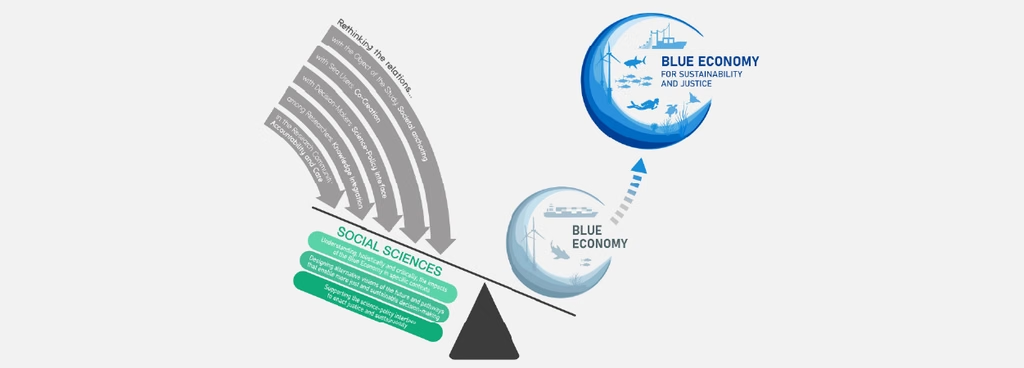
Traditional Blue Economy approaches often focus on technological and ecological solutions, but neglect the social dimensions that influence resource management and policy acceptance. The research collaboration between the University of Malta and international initiatives such as the COST Action CA22122 “Rethinking the Blue Economy” underscores the importance of a multidisciplinary approach. By including social factors, policies can better account for societal impacts and foster community co-creation, which is vital for long-term sustainability.
In practical terms, this involves engaging local communities in decision-making processes, understanding social dynamics and cultural contexts, and ensuring accountability and care in resource management. These elements are essential for fostering social justice and equitable opportunities in maritime industries like fishing, tourism, and shipping.
Strategies to Incorporate Social Science into the Blue Economy Frameworks
Co-Creation and Community Engagement
A key approach is involving communities directly in planning and decision-making, which cultivates shared ownership and aligns initiatives with societal needs. The University of Malta advocates for participatory processes that promote transparency and inclusivity, helping reconcile economic objectives with social justice.
Enhancing the Science-Policy Interface
Bridging the gap between scientific research and policymaking ensures that societal considerations are embedded in regulations and strategies. Social science provides insights into stakeholder values, behavioral patterns, and social networks that influence policy outcomes.
Knowledge Integration and Values of Accountability
Combining ecological data with social insights fosters comprehensive assessments of Blue Economy projects. Emphasizing accountability ensures that policies are sustainable and equitable, respecting cultural diversity and social rights.
The University of Malta’s Contributions to Social Science and the Blue Economy
The University actively participates in international research initiatives aimed at rethinking ocean use from a socio-ecological perspective. Publications such as the recent article in NPJ Ocean Sustainability by Penca et al., supported by the COST Action CA22122, demonstrate how social sciences are vital for advancing sustainability and justice in ocean-based economies.
Furthermore, the university’s involvement extends to public discussions, seminars, and conferences that promote awareness and practical solutions grounded in social science insights. The focus remains on creating policies that are socially just, environmentally sustainable, and economically viable.
Implications for Malta and the Mediterranean Region
Malta, as an island nation heavily reliant on maritime activities, illustrates the importance of integrating social sciences into Blue Economy strategies. Local communities frequently face challenges related to resource distribution, environmental preservation, and socio-economic inequalities. The university’s research and policy recommendations aim to ensure that maritime development benefits all segments of society while safeguarding the region’s unique ecological and cultural heritage.
Shaping a Sustainable and Just Blue Economy
The future of the Blue Economy depends on valuing and integrating social science insights to address societal challenges, promote justice, and ensure sustainable use of marine resources. By emphasizing participatory approaches, science-policy integration, and accountable practices, stakeholders can build a more equitable and sustainable ocean economy. The University of Malta exemplifies the vital contribution of social sciences in rethinking and shaping a Blue Economy rooted in sustainability and justice.
Ready to take the next step? Fill out the form to get a free consultation with Studygram, and let us help you plan your next steps toward studying in Malta.