Addressing Inequality in Elderly Care: Insights from the University of Malta and Sweden
Understanding the Complexities of Inequality in Elderly Care
The Plight of Foreign-Born Care Workers in Sweden
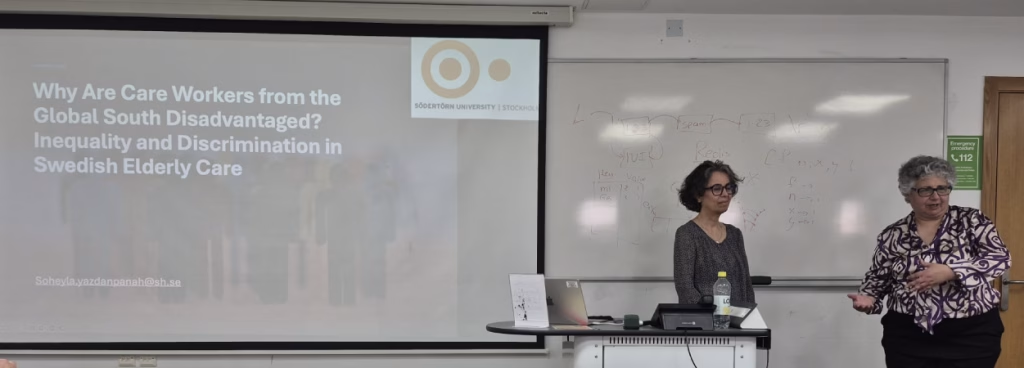
A recent public talk hosted by the Department of Gender and Sexualities at the University of Malta shed light on the significant inequalities faced by foreign-born care workers in Sweden. Dr. Soheyla Yazdanpanah, a Senior Lecturer in Gender Studies at Södertörn University, highlighted the disparities in job status and pay between native-born and foreign-born workers. These disparities stem from factors such as devaluation of foreign credentials, limited access to workplace networks, and shorter work experience.
Challenges in the Maltese Elderly Care Sector
Professor JosAnn Cutajar, Head of the Department of Gender and Sexualities at the University of Malta, presented findings from the Mobilecare Project, further contextualizing the issue of inequality in care work. The project’s findings highlighted challenges faced by non-Maltese care workers in Malta, echoing the broader issues discussed by Dr. Yazdanpanah. These insights underscore the need for comprehensive strategies to address systemic inequalities in both countries.
University of Malta’s Role in Addressing Inequality
Gender Studies and Research Initiatives
The University of Malta’s Department of Gender and Sexualities plays a crucial role in researching and raising awareness about these critical issues. The Mobilecare Project, for instance, provides valuable data and insights into the experiences of care workers in Malta. By fostering research and discussion, the university contributes to a deeper understanding of the challenges and potential solutions.
Promoting Education and Awareness
The public talk on inequality in Swedish elderly care exemplifies the university’s commitment to promoting education and awareness. Such events provide a platform for experts to share their research and engage in meaningful dialogue with the community. This commitment to knowledge dissemination is essential for driving positive change in the elderly care sector.
Actionable Steps Towards a More Equitable Future
Recognizing and Valuing Foreign Credentials
One crucial step towards addressing inequality is to establish systems that recognize and value the qualifications and experience of foreign-born care workers. This includes streamlining the credentialing process and ensuring fair assessment of skills.
Improving Access to Workplace Networks and Support
Creating inclusive workplace environments where foreign-born care workers have equal access to professional development opportunities and support networks is vital. Mentorship programs and networking initiatives can help bridge the gap and foster a sense of belonging.
Strengthening Labor Rights and Protections
Ensuring that all care workers, regardless of their origin, have equal access to fair wages, benefits, and safe working conditions is fundamental. Stronger labor laws and enforcement mechanisms are needed to protect vulnerable workers from exploitation and discrimination.
Promoting Cultural Sensitivity Training
Cultural sensitivity training for both native-born and foreign-born staff can help foster understanding and respect in the workplace. This training should address cultural differences, communication styles, and potential biases to create a more harmonious and inclusive work environment.
Collaborative Efforts for Sustainable Change
Addressing inequality in elderly care requires a multi-faceted approach involving policymakers, employers, educational institutions, and care workers themselves. The University of Malta is actively contributing to this effort through its research, educational programs, and public engagement initiatives. By fostering collaboration and promoting evidence-based solutions, progress can be made toward a more equitable and sustainable future for all care workers and the elderly individuals they serve.
Start Your Journey at the University of Malta
Discover a wide range of programs and academic opportunities at the University of Malta. Fill out the form to get a free consultation with Studygram, and let us help you plan your next steps toward studying in Malta.