University of Malta’s Department of Geosciences Celebrates 10 Years of Academic Leadership and Environmental Research
On 11 July 2025, the University of Malta’s Department of Geosciences marked its 10th anniversary, underscoring a decade of rigorous research, innovative education, and impactful collaboration across Malta and the Mediterranean. This milestone is not only a celebration of institutional history but a testament to the department’s ongoing commitment to understanding Earth systems in the face of climate change and environmental challenges.
A Decade of Progress: Highlights of the Department
Established to respond to the growing need for scientific insight into Malta’s unique environmental systems, the department has evolved into a nationally recognised centre of excellence. Its interdisciplinary focus spans operational oceanography, seismology, marine geology, and atmospheric studies—areas that are increasingly critical for sustainable development and resilience planning. Throughout the last ten years, faculty and students have produced a growing portfolio of EU and international research projects, publishing in high‑impact journals and presenting at global conferences.
Founding Vision and Growth
The department was conceived with a clear vision: to produce students who understand the complex interplay of the planet’s physical processes and to provide cutting‑edge research platforms for addressing emerging environmental issues. Early on, the department secured partnerships with local marine agencies, and over the decade it expanded to include advanced remote‑sensing tools, high‑performance computing clusters, and an integrated field‑training programme that takes students from the Mediterranean shelf to the ionosphere.
Research Focus Areas
- Operational Oceanography: Real‑time monitoring of sea‑state, water‑quality indicators, and shoreline erosion using autonomous buoys and satellite data.
- Seismology & Geophysics: Active seismic monitoring of the Maltese archipelago, contributing to hazard assessment and tectonic research.
- Marine Geology: Sediment core analysis to reconstruct past climate fluctuations and inform coastal sediment management.
- Atmospheric & Climate Studies: Climate modelling and atmospheric chemistry research addressing local air‑quality issues and regional climate trends.
Impactful Collaborations & International Partnerships
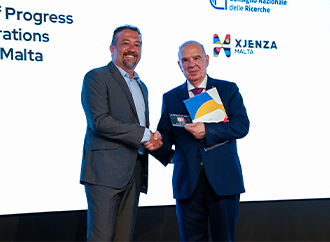
Celebrating its anniversary, the department highlighted strategic alliances that have amplified its research reach. Partnering with Xjenza Malta, the event—titled “A Decade of Progress and Collaborations with Xjenza Malta”—showcased how joint funding and shared expertise can drive applied research.
Xjenza Malta and Other Partners
Xjenza Malta, a knowledge‑sharing platform for the Maltese digital economy, played a pivotal role by co‑funding public‑private research initiatives. The partnership has accelerated the uptake of data‑driven solutions in marine monitoring and environmental policy, fostering cross‑disciplinary teams that include engineers, policymakers, and environmental scientists.
Global Outreach
Keynote speakers, including Dr. Tony Stabile from Italy’s Consiglio Nazionale delle Ricerche, underscored the department’s expanding international footprint. Collaborations with institutions across Europe and the United States have resulted in joint PhD programmes, joint data‑sharing agreements, and a growing presence on the global scientific stage.
Academic Programs & Student Opportunities
Alongside research, the department offers robust undergraduate and postgraduate programmes designed to equip students with both theoretical knowledge and practical skills.
Undergraduate Offerings
The Bachelor of Science in Geoscience integrates modules in climatology, oceanography, and GIScience. Students benefit from hands‑on training in field mapping, seismic data interpretation, and remote‑sensing analysis. The curriculum also includes elective modules on environmental policy and sustainability, preparing graduates for diverse career pathways in academia, government, and industry.
Postgraduate and Research Opportunities
Graduate students pursue Master’s degrees in specialized tracks such as Marine Geoscience and Atmospheric Science. The department’s PhD programme attracts candidates worldwide, offering access to cutting‑edge equipment at the Esplora Planetarium Hall and collaborative labs. Graduates have secured positions at leading research organisations, universities, and international bodies such as the European Commission and UNESCO.
Facilities & State‑of‑the‑Art Resources
The department’s physical infrastructure underpins its research mission. The Esplora Planetarium Hall hosts high‑resolution simulations of Earth‑system processes, while dedicated marine laboratories support in‑situ sampling and laboratory analyses. Students and staff frequently collaborate in the department’s high‑performance computing cluster, enabling advanced numerical modelling of climate scenarios and seismic hazard assessments.
Future Directions: Sustaining Environmental Resilience
Looking ahead, the department is positioning itself as a key contributor to Malta’s resilience strategy. Upcoming projects focus on sea‑level rise modelling, adaptive coastal management, and integrated ecosystem monitoring. Faculty and students will collaborate with local councils, NGOs, and European partners to translate research findings into actionable policy.
Upcoming Projects
1. Coastal Adaptation Strategy for Marsa: Using coupled ocean‑atmosphere models to predict shoreline changes over the next 50 years.
2. Seismic Early‑Warning System: Enhancing existing monitoring networks to provide faster, more accurate alerts for the island.
3. Atmospheric Chemistry Network: Expanding regional air‑quality monitoring to include nitrogen oxides and particulate matter.
How Students Can Get Involved
Students are encouraged to engage in citizen‑science initiatives, such as the Maltese Marine Biodiversity Survey. These projects provide real‑world data collection experience and strengthen ties between academia and the local community.
Join the Department of Geosciences Family
Whether you are a high‑school graduate aspiring to a career in Earth sciences, a postgraduate student seeking a research‑intensive environment, or a professional looking to contribute to Malta’s environmental resilience, the University of Malta’s Department of Geosciences offers a supportive and innovative setting.
Apply for the next academic year and begin your journey at the intersection of science and sustainability.
To experience the department’s vibrant atmosphere, schedule a campus visit and explore the state‑of‑the‑art facilities and ongoing research projects.
Have questions about programs or research opportunities? Contact the department office today for personalised guidance.
Read more about the department’s recent publications and current projects on our research page.