
University of Malta Study Reveals Generational Shift in Maltese /r/ Pronunciation
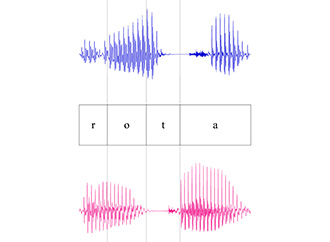
In a recent investigation conducted by the University of Malta’s Linguistics Department, researchers have documented a clear generational shift in how Maltese speakers produce the /r/ sound. While the older cohort (45 and older) predominantly rolls the /r/ in an alveolar trill reminiscent of Italian pronunciation, younger speakers (under 25) favor a softer alveolar approximant more in line with Standard English. This finding offers valuable insight for educators, linguists, and language learners seeking to understand contemporary Maltese pronunciation and its underlying causes.
Background: The Significance of /r/ in World Languages
The /r/ phoneme is uniquely variable across languages. Although a /t/ sound is produced almost identically everywhere, /r/ can be realized as a trill, tap, flap, or approximant, depending on linguistic context. Because it is so flexible, /r/ serves as a sensitive marker for language contact and shift. In Malta, where Italian, English, and Maltese intermingle, changes in /r/ production reflect broader cultural influences.
Historical Maltese /r/ Pronunciation
Traditionally, Maltese /r/ has been an alveolar trill. Speakers formed the sound by vibrating the tongue tip against the alveolar ridge, as in Spanish perro. Italian television and formal education reinforced this trilled articulation, providing a stable exemplar for older generations. Recent English media, by contrast, introduces an alveolar approximant, a softer version heard in words like “red” and “rabbit.”
Methodology of the University of Malta Study
The researchers recruited two distinct age groups: speakers aged 45+ and speakers under 25. Participants underwent phonetic recording sessions in a controlled environment and answered questionnaires about media habits and language exposure. In the older cohort, many had acquired Italian informally through television, whereas the younger group relies predominantly on English-language media. The researchers were particularly interested in whether this differential exposure would influence the realization of /r/ in Maltese speech.
Data Collection and Analysis
- High‑resolution audio recordings of spontaneous speech.
- Phonetic transcription using IPA.
- Acoustic measurements of trill duration and approximant formant patterns.
- Statistical comparison of trill versus approximant frequencies across age groups.
Key Findings: A Generational Shift in /r/ Production
The analysis revealed a pronounced difference:
- Older speakers predominantly produced a trilled /r/ (approximately 80% of instances).
- Under‑25 speakers leaned toward an approximant /r/ (around 70% of instances).
- Both groups occasionally used the alternate form, suggesting gradual integration rather than a sharp break.
Interestingly, the older group also showed increased approximant usage, likely due to prolonged exposure to English. However, the shift is not absolute; many older speakers maintain a trilled baseline, and younger speakers sometimes intermix the two variants.
Implications for Maltese Language Evolution
These results demonstrate that Maltese pronunciation is evolving under the influence of global media. The trend mirrors historical developments in other languages; for example, English has moved from trills to approximants in the past centuries. The study confirms that language change is continuous and that current generations are already shaping the next iteration of Maltese phonology.
Perception and Understanding: Do Listeners Prefer Their Own /r/?
One hypothesis suggested that speakers might better understand speech that matches their own pronunciation. Researchers tested this by presenting listeners with recordings of both trilled and approximant /r/ sounds. Contrary to expectation, both groups reported a mild preference for the trilled variant, hinting at a perception bias toward a more “pure” or traditional sound.
Practical Takeaways for Educators
- Curriculum Design: Incorporate both trill and approximant models in pronunciation lessons, ensuring students are fluent in each variant.
- Assessment: Evaluate students on accurate production of the traditional trilled /r/ as a cultural benchmark, while also encouraging adaptability to the approximant used in informal contexts.
- Multimedia Resources: Use authentic media clips that showcase both Italian and English influences, illustrating the spectrum of /r/ realizations in everyday Maltese.
- Listener Awareness: Include listening exercises that emphasize the perceptual differences between trill and approximant, helping learners develop a critical ear.
Advice for Language Learners and Communicators
If you’re learning Maltese or interacting with native speakers, understanding the generational pronunciation nuances can improve communication:
- Adapt Your Pronunciation: When speaking with older interlocutors, default to a trilled /r/; with younger speakers, a softer approximant may feel more natural.
- Active Listening: Pay attention to how people roll (or approximate) the /r/ in context; this will help you adjust your own speech accordingly.
- Cultural Context: Recognize that the trilled /r/ is often linked with formal or literary contexts, while the approximant appears in everyday conversation and media.
Future of Maltese: Ongoing Research and Community Engagement
The University of Malta will host the international “r‑atics 8” conference, bringing together phonetics experts worldwide. The event will spotlight the generational r‑shift, providing a platform for further studies and community dialogue. Researchers plan to expand their dataset, exploring how other phonetic features—such as intonation and vowel length—interact with /r/ evolution.
Getting Involved
- Participate in future surveys or phonetic recordings if you’re a Maltese speaker.
- Attend the “r‑atics 8” conference to hear updates and network with linguists.
- Share your observations in social media discussions or local language forums.
Take Action: Enhance Your Maltese Language Competence
Understanding the subtle shifts in pronunciation empowers educators, students, and language enthusiasts alike. By incorporating both trilled and approximant /r/ practices into instruction and daily usage, we can preserve Maltese heritage while acknowledging its living evolution.
Submit your application today to join the University of Malta’s next cohort of language science students and contribute to ongoing research into Maltese phonetics.
For more details on courses and research opportunities, visit the University of Malta’s linguistics department website.
Have questions or insights about this study? Write to us! Your feedback helps shape future research directions.