PaDME Project: How The University of Malta Advanced Data Protection in Medical Research
Setting the Stage: PaDME’s Mission and Funding
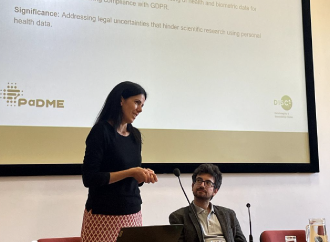
The Protection of Data in Medical Research (PaDME) project was launched at the University of Malta with clear objectives: to unlock the value of health data for scientific discovery while maintaining the highest standards of privacy compliance. Backed by Xjenza Malta, the initiative combined legal expertise with cutting‑edge technology to create a framework that satisfies both researchers and regulators.
Delivering a Draft Law and Data‑Access Agreement
One of PaDME’s most tangible outputs is a fully drafted piece of legislation and a data‑access agreement that incorporates standard protection clauses. These documents serve as a reference model for institutions wishing to establish legal certainty around how sensitive data may be collected, stored, shared, accessed and processed. By codifying a shared set of rules, the project has eliminated a key barrier for researchers who previously struggled with ambiguous data‑protection requirements.
Impact on Institutional Policy
Universities, hospitals and research agencies in Malta have begun to adopt the draft provisions as part of their internal data‑handling policies. The resulting stability gives clinicians confidence to collaborate on multi‑centre studies without the administrative burden of negotiating bespoke agreements for every cooperation.
Bridging Disciplines: The Brainhack GDPR Workshop
Central to PaDME’s interdisciplinary ethos was the Brainhack GDPR workshop—a hackathon‑style event that drew participants from law, medicine, data science, and ethics across Malta, Australia, Germany, Poland and the UK. The workshop’s format fostered rapid idea exchange, leading to clearer understandings of GDPR obligations among stakeholders who typically operate in siloed environments.
Key Takeaways for Researchers
- Practical tools for anonymising medical datasets while still preserving research value.
- Case studies on how to structure consent forms that fulfil both ethical and regulatory demands.
- Strategic approaches to data stewardship that align with emerging European regulations.
Showcasing Results at Cyberspace2024
PaDME’s research findings were presented at the Cyberspace2024 conference in Brno, Czech Republic. The conference’s international audience underscored the relevance of Malta’s contribution to global data‑protection debates. Academic manuscripts stemming from the project are now under review at several peer‑reviewed journals, further cementing the University of Malta’s reputation as a leader in interdisciplinary research on data privacy in medicine.
From Project to Cluster: The Birth of DISC
Building on PaDME’s successes, Dr. Mireille M Caruana and Dr. Claude JBajada founded the Data Integrity and Stewardship Research Cluster (DISC). DISC extends PaDME’s vision by focussing on continuous collaboration across legal, ethical, scientific, social and technological domains. This ongoing platform ensures that research remains open and transparent, while safeguarding participant rights and privacy.
DISC’s Alignment with the European Health Data Space
The network’s activities are particularly timely as the European Union’s new Health Data Space regulation comes online. DISC’s expertise in data governance positions it as a valuable partner for national entities navigating the transition to interoperable, patient‑centric data ecosystems.
Practical Guidance for Researchers and Policymakers
In the wake of the PaDME project, stakeholders looking to replicate its achievements should consider the following steps:
- Start with a comprehensive data‑protection audit that identifies risk areas and compliance gaps.
- Engage multidisciplinary teams early in project design to embed privacy considerations into every stage.
- Utilise the draft law and agreement templates provided by PaDME as a baseline, tailoring them to local contexts.
- Hold regular hackathons or workshops to keep the conversation alive and to iterate solutions based on real‑world challenges.
- Publish results in open‑access venues to encourage data‑sharing practices that respect privacy.
Looking Ahead: Opportunities for Collaboration
The University of Malta invites researchers, industry partners and policy makers to build on PaDME’s foundation. Whether you are a data scientist seeking to contribute to a privacy‑aware research pipeline or a legal expert aiming to refine data‑protection frameworks, there is a place for collaboration within DISC.
Take Action
Ready to explore how the PaDME project can inform your research or policy initiatives?
- Learn more about the PaDME project and its impact on data protection.
- Discover interdisciplinary research opportunities at the University of Malta.
- Join the Data Integrity and Stewardship Research Cluster and contribute to open science.
- Get in touch with our research offices to discuss potential collaborations.
- Read the full story covering the project’s achievements.
By integrating robust legal frameworks with technological innovation, the PaDME project has set a high bar for data‑protected medical research. The University of Malta’s ongoing commitment through DISC ensures that this legacy continues to influence policy, practice and scientific discovery across Europe and beyond.