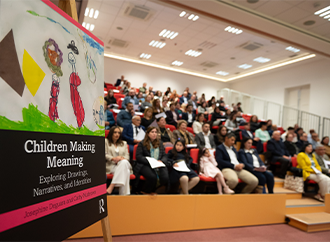
On April 7, 2025, the University of Malta celebrated the launch of a seminal book that redefines how we view children’s creative expressions. Children Making Meaning: Exploring Drawings, Narratives and Identities, co‑authored by Dr. Josephine Deguara and Prof. Dame Cathy Nutbrown, draws on years of research in early childhood education and psychology to show how young learners use art and storytelling to build self‑conception and communicate with the world.
What the Book Brings to Early Childhood Education
At its core, the book argues that drawing is not merely play; it is a structured language that children use to encode experiences, memories and aspirations. The authors present a funds of knowledge perspective that treats every picture and story as a data source for educators. By studying these artifacts, teachers can uncover:
- Hidden themes about family, culture and community.
- Indicators of emotional well‑being and social development.
- Unique individual learning trajectories and preferences.
These insights help create lesson plans that honor each child’s voice and promote inclusive practices.
Applying the Findings in the Classroom
1. “Picture Journals” – Encourage students to draw or doodle at the end of each day. This regular rhythm offers a repository of expressions that reveal mood changes over time.
2. Story‑Based Assessment – Instead of traditional tests, ask children to narrate their drawings in a “show‑and‑tell” session. Listen for metaphors, symbols and narrative arcs.
3. Cultural Mapping – Use drawings to map cultural references. Children often sketch symbols that reflect home traditions; inviting a discussion-around those symbols bridges home and school life.
4. Multimodal Feedback – Combine visual and textual responses to allow children who struggle with written language to still demonstrate understanding.
The Launch Event: A Confluence of Research and Practice
The ceremony, held at Valletta Campus, attracted academics, policymakers, and community members across Malta and Europe. By streaming the event, the University extended the reach of its message, inviting global scholars to engage in real‑time Q&A and network virtually.
Keynote speakers underscored the importance of partnership between universities and local schools. Prof. Josephine Milton opened with an overview of the department’s strategic goals, while Prof. Rebecca Lawthom highlighted Sheffield’s collaborative efforts that helped shape the book’s methodology.
Dr. Deguara and Prof. Nutbrown detailed how drawing functions as a vehicle for identity construction. Their discussion illustrated practical case studies: a four‑year‑old who used a picture of a boat to reveal a fascination with the sea, or a six‑year‑old whose night‑time drawings showcased a desire for safety and comfort.
Exhibition Highlights
Selected drawings were displayed to illustrate the diversity of expression. The exhibit served as a visual testament to the assertion that children’s artwork offers rich, layered meanings beyond mere aesthetics.
These pieces demonstrate that:
- Children internalize societal narratives early and can challenge or confirm them through visuals.
- Early detection of identity themes facilitates timely supportive interventions.
- Celebrating children’s art fosters confidence and respect for self.
Why Parents and Educators Should Read This Book
For parents, the book offers a set of guidelines:
- Recognise the narrative voice in your child’s drawings.
- Ask open‑ended questions that encourage elaboration.
- Provide diverse drawing materials to let children experiment.
- Leverage storytelling as a bonding activity.
Teachers can use the book to:
- Develop culturally responsive curricula.
- Assess developmental milestones through visual cues.
- Foster inclusive environments where every child’s identity is visible.
Next Steps for Educators and Researchers
1. Read the Full Text – The book is available for purchase and can be requested from the University of Malta’s library. Contact Dr. Josephine Deguara at [email protected].
2. Attend Workshops – The university has scheduled a series of practical workshops throughout the 2025 academic year focused on integrating drawing narratives into lesson plans.
3. Join the Continuous Research Dialogue – Scholars can collaborate with the Early Childhood and Primary Education department to conduct longitudinal studies on the impact of visual language in learning.
Call to Action
Explore the book to deepen your understanding of how children communicate beyond words. Consider adopting the picture‑journal practice in your classroom or at home to unlock richer insights into your students’ or children’s inner worlds.
For more information or to join upcoming workshops, contact the Department of Early Childhood and Primary Education or visit the university’s website.
Have questions about how to implement visual assessment methods? Write to us or schedule a consultation with the department’s instructional designers.
Share your experiences or case studies in the comments below and connect with a community of educators who value children’s voices.