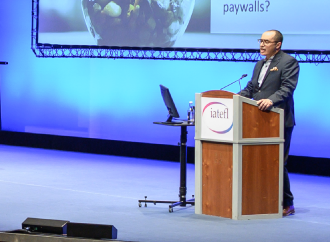
The recent plenary session delivered by Associate Professor Daniel Xerri of the Centre for Academic Literacies and English Communication Skills at the University of Malta provided a comprehensive overview of how English language teachers can effectively engage in classroom research. Conducted at the International Association of Teachers of English as a Foreign Language (IATEFL) conference in Edinburgh, the talk offered practical strategies for ownership, relevance, and conceptualisation of research within everyday teaching practice.
Understanding the IATEFL Conference and Its Impact on ELT Professionals
The IATEFL conference is the world’s largest gathering for English Language Teaching (ELT) educators, educators, and researchers. In 2025, the event hosted nearly 2,500 delegates across four days of workshops, conferences and networking activities. The University of Malta’s participation, through Prof. Xerri’s plenary, positioned the institution as a leading voice in linking research to classroom practice for the benefit of learners in Malta and beyond.
Key Themes Explored at the Plenary
- Teacher ownership of research processes and its empowerment value
- Ensuring research relevance to diverse classroom contexts
- Conceptualising research as a flexible and iterative practice rather than a rigid protocol
By framing research as a collaborative and context-sensitive activity, Prof. Xerri encouraged teachers to view their own classrooms as research laboratories—where every lesson can generate data for improvement.
Why Classroom Research Matters for Maltese English Teachers
Maltese English teachers face unique challenges: bilingual classroom environments, varied learner proficiency, and the need to integrate cultural contexts. Classroom research offers a means to address these challenges directly by:
- Identifying pacing issues specific to Maltese learners
- Testing new teaching strategies (e.g., task-based learning) with immediate feedback
- Developing assessment tools that reflect local curriculum standards
When research is owned by teachers, the solutions are inherently relevant and implementable without heavy institutional support.
Practical Steps to Start Classroom Research
- Define a focused research question. Examples: “Does incorporating local literature improve reading engagement among Grade 7 students?” or “What is the effect of peer‑review writing workshops on student confidence in Malta’s secondary schools?”
- Select a suitable data collection method. Consider surveys, classroom observations, learning analytics, or reflective journals. Each provides different insights and can be combined for triangulation.
- Apply ethical guidelines. Even small-scale research must protect participant confidentiality and obtain consent where required. The University of Malta’s Research Ethics Office offers templates and support.
- Analyze data using accessible tools. Basic descriptive statistics, thematic coding or simple spreadsheets can reveal patterns without requiring advanced software.
- Reflect and iterate. Use findings to modify practice, then re‑sample to gauge impact. The cycle of planning‑action‑reflection is the backbone of classroom research.
By following these steps, teachers create a continuous improvement loop that benefits both instruction and student outcomes.
Resources from the University of Malta for Supporting ELT Research
The Centre for Academic Literacies and English Communication Skills provides several resources for teachers wishing to pursue research:
- CALC Scholars’ Research Hub – access to database of published papers and ongoing projects.
- University of Malta Master’s in Teaching English to Speakers of Other Languages (TESOL) – delivers advanced research training.
- UM Research Repository – a comprehensive database of studies on teaching methodologies and learning outcomes.
- Professional development webinars on data analysis and educational technology.
These offerings are designed to support teachers at all levels, from novice to seasoned educator.
Explore the Academic Offerings at the University of Malta
Interested in advancing your ELT career? The University of Malta offers a range of courses and pathways tailored for teachers:
- Undergraduate program in English Language and Linguistics provides foundational knowledge.
- Specialist courses and workshops on classroom assessment, curriculum design, and language policy.
- Opportunities to collaborate with faculty on research projects as part of the academic community.
Whether you aim to enhance your classroom practices or pursue an academic career, the University of Malta’s flexible programs can accommodate your goals.
Ready to start a research project in your own classroom? Apply for a teaching certificate or enroll in a master’s program and gain the skills to conduct impactful research that benefits your learners and the wider ELT community.