
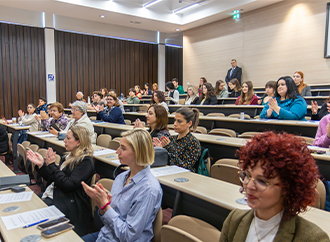
Overview of the Seminar
The University of Malta (UM) convened a focused discussion on the intersection of women, politics, and violence on 10 April 2025 at the Arts Lecture Theatre. The event, organized by UM’s Gender Equality & Sexual Diversity Committee (GESDC) in partnership with the Gender and Sexualities Department, gathered academics, policymakers, and political figures to examine the challenges women face in public office and chart a path toward safer, more inclusive political spaces.
Opening Remarks by President Myriam Spiteri Debono
President Spiteri Debono highlighted that violence directed at women who pursue political careers is a distinct form of gender‑based violence. She stressed that sexist rhetoric, targeted harassment, and cyber‑violence constrain political ambitions and dissuade qualified women from stepping forward. The President called for systematic reforms to counter the social structures that facilitate such behaviour.
Keynote Speeches and Research Insights
Representatives from the Parliament’s Equality and Reform office, the University’s Pro‑Rector for Staff and Student Affairs, and leading scholars delivered presentations that brought empirical data and contextual analysis to the room.
Hon. Rebecca Buttigieg – Parliamentary Secretary for Equality and Reform
Buttigieg outlined national strategies to enhance protection for women politicians, including stricter enforcement of harassment laws and clearer reporting protocols within parliamentary institutions.
Prof. Carmen Sammut – Pro‑Rector for Staff and Student Affairs
Sammut discussed the role of higher‑education institutions in fostering political participation among female students, citing training modules and mentorship schemes that demystify political engagement.
Prof. Fiona Buckley – Research on Gender‑Based Violence in Politics
Dr. Buckley presented cross‑national findings that indicate:
- Both male and female politicians experience threats and harassment in democratic and non‑democratic contexts.
- Women face higher rates of sexualized and psychological violence.
- Young, single women are disproportionately targeted.
- Online harassment disproportionately affects women, with a higher incidence of uncivil and gender‑specific messages.
- LGBTQ+ politicians report more appearance‑based harassment than policy‑based.
These patterns underscore the need for layered safeguards addressing personal safety and institutional culture.
Panel Discussion: Protecting Women in the Political Sphere
A round‑table featuring MPs, journalists, and local‑government officials identified four priority domains:
- Political Parties: Developing internal codes of conduct that protect female members from harassment.
- Parliament: Re‑examining chamber protocols to ensure respectful discourse and rapid response to threats.
- Journalists: Promoting ethical reporting standards that avoid sensationalism of female politicians’ private lives.
- Social Media Platforms: Advocating for clearer moderation policies and rapid removal of harassing content.
Dr. Therese Comodini Cachia – Former MEP
Comodini Cachia shared her experiences in Parliament and urged the adoption of robust support systems for women MPs, including peer‑support groups and security training.
Hon. Dr. Katya De Giovanni – Labour Party MP
De Giovanni highlighted the role of grassroots advocacy in empowering women to run for office and the need for transparent candidate selection processes.
Expert Commentary from the EU Level
Dr. Helena Dalli, former European Commissioner for Equality, wrapped up the seminar with a comprehensive policy framework:
- Party Level: Institutions should audit internal harassment policies regularly.
- National Level: Enact legislation that protects female political actors and ensures whistle‑blower protection.
- EU Level: Encourage cross‑border data sharing on incidents of gender‑based violence in politics to facilitate coordinated responses.
What These Findings Mean for Political Stakeholders
1. *For Aspiring Female Politicians* – Secure mentorship from experienced female leaders, familiarize yourself with the national harassment reporting framework, and understand the digital safety tools available.
2. *For Political Parties* – Embed a zero‑tolerance harassment clause in party constitutions, train staff on respectful communication, and establish a confidential reporting hotline.
3. *For Journalists* – Adopt balanced reporting guidelines that avoid gender‑bias, use verified sources, and refrain from publishing personal details not relevant to the public interest.
4. *For Social Media Companies* – Implement rapid‑deletion protocols for harassing content targeted at female politicians and provide a protected reporting channel for verified users.
Action Steps to Reduce Violence Against Women in Politics
- Develop a comprehensive policy toolkit tailored to political institutions, drawing from the EU framework presented by Dr. Dalli.
- Introduce mandatory harassment‑prevention training for all party members and parliamentary staff.
- Create a dedicated support desk that offers legal, psychological, and security assistance to affected female politicians.
- Leverage technology to monitor online harassment in real‑time and provide evidence for law‑enforcement action.
- Encourage academic‐government partnerships to fund research on gender‑based violence, closing data gaps highlighted by Dr. Buckley.
Continue the Conversation
The seminar was open to the public and was designed to spark dialogue among policymakers, students, and civil society. UM encourages stakeholders to engage with the outputs of this event and to support the implementation of protective measures.
To learn more about UM’s initiatives on gender equality, visit the Gender Studies Department or the Gender Equality & Sexual Diversity Committee. For direct inquiries about the seminar, contact Ms. Tamara Nesic at [email protected].
Get Involved Today
- Explore UM’s degrees in Political Science and Gender Studies to build the expertise needed to advocate for safer political environments.
- Schedule a free consultation with the GESDC to discuss how your organization can collaborate on anti‑violence initiatives.
- Share your experience or suggestions in the comments below to help shape future seminars and policies.
- Bookmark the original news release for updates on upcoming events.
By taking proactive steps, political stakeholders can contribute to a culture where women are empowered, protected, and respected in their pursuit of public service.