
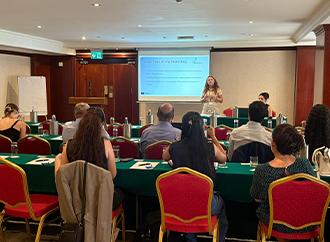
Overview of the Citizen Workshop
On July 11, 2025, the Institute for Climate Change and Sustainable Development at the University of Malta convened a stakeholder‑driven citizen workshop in collaboration with the Ministry for Transport, Infrastructure and Public Works and Malta Public Transport. The event was part of the Horizon Europe MetaCCAZE project and focused on testing and potential deployment of an autonomous, on‑demand e‑bus service across Malta and Gozo.
The Goal: Aligning Autonomous Transport with National Priorities
The workshop’s purpose was twofold: first, to gather insights from the public, business community and transport experts on their hopes and concerns regarding autonomous e‑buses; second, to refine the BIGM (Business, Innovation, Governance, Mobility) framework that underpins the project’s factsheet. This factsheet will set the policy, funding and operational parameters that demonstrate how the new service fits into the country’s climate‑neutral agenda.
Key Discussions and Feedback
- Congruence with Sustainable Transport Goals: Participants highlighted that autonomous e‑buses could considerably reduce emissions by enhancing frequency, reducing empty‑run kilometres, and enabling a shift from private vehicles to shared electric transport.
- Operational Feasibility: Attendees questioned suitable routes, the role of traffic signals, and how to maintain service reliability during peak and off‑peak periods.
- Public Acceptance: A recurring theme was the need for transparent communication—demonstrating safety records, explaining how demand‑based dispatch works, and simplifying the booking process for all age groups.
- Regulatory and Governance: Participants stressed the importance of clear liability frameworks, data‑protection measures, and defining the responsibilities of the city, operators, and technology suppliers.
- Inter‑Island Connectivity: Specific emphasis was placed on Gozo, where population density and tourist traffic demand flexible, high‑capacity solutions without the infrastructure costs of conventional bus lines.
Recommendations for Implementation
The workshop produced a series of actionable recommendations that can guide the next phases of the MetaCCAZE project:
- Identify high‑traffic corridors and high‑demand nodes—e.g., airports, university campuses, and hotel clusters—to serve as initial pilot hubs.
- Integrate the e‑bus dispatch system with existing traffic management centers to allow dynamic routing around congestion and incidents.
- Develop a public engagement strategy that includes on‑ground demos, insurance coverage details, and multi‑language support to build trust.
- Establish a governance committee that comprises transport officials, academics, industry partners, and citizen representatives to oversee policy, safety standards, and iterative improvements.
- Create a flexible pricing model that balances affordability for commuters with the operational costs of maintaining a fleet and infrastructure.
The Living Lab: Linking Research and Real‑World Outcomes
The incident is part of a broader Living Lab initiative situated in Gozo and Malta, a research platform that tests sustainable mobility solutions under real‑world conditions. By engaging local and international partners, the project seeks to produce a comprehensive dataset that informs future transport planning and aligns with EU climate objectives.
What Residents and Businesses Can Expect
For the average citizen, an autonomous on‑demand e‑bus service translates to:
- Reduced travel wait times through on‑demand scheduling.
- Lower carbon footprint due to electric propulsion and optimized routing.
- Access to reliable public transport even during off‑peak hours, which encourages car‑sharing or walking for last‑mile travel.
For businesses, especially those on the island, the advantages include:
- Potential reduction in employee commuting costs and a more predictable transport budget.
- A modern, tech‑savvy image that can attract talent concerned with sustainability.
- Opportunities to partner with the operators in offering special corporate rates or integrated mobility services.
Next Steps for Stakeholders
Moving forward, the University of Malta will consolidate the workshop findings into a comprehensive factsheet, collaborating closely with the Ministry, Malta Public Transport, and other stakeholders. The document will map out the regulatory framework, financial models, and operational timelines.
In addition to the metaCCAZE project, the Living Lab will continue to host public consultations, pilot tests, and data‑collection activities, ensuring that the autonomous e‑bus concept remains responsive to user needs and national climate targets.
How to Get Involved
Community members who want to contribute ideas or participate in upcoming pilots can:
- Contact the Institute for Climate Change and Sustainable Development through the University’s website.
- Attend scheduled public forums and feedback sessions arranged by Malta Public Transport.
- Provide input via the online survey linked in the project portal.
Students and researchers may explore collaboration opportunities or internships within the project’s research arm, bridging academic inquiry and practical implementation.
Conclusion
By bringing citizens, academics, and industry representatives together, the University of Malta is charting a future where autonomous on‑demand e‑buses could become a realistic option for both the island of Malta and its sister island, Gozo. This initiative illustrates how strategic partnerships, data‑driven decision‑making, and rigorous public engagement can drive sustainable transport innovation in a small‑state context.
Share your experiences in the comments below and stay tuned for updates on the next phase of the pilot program. For more insights into how autonomous mobility can reshape the Maltese transport landscape, explore our related articles on sustainable transport. We invite you to submit your application today for research projects that focus on clean mobility solutions.